广告
加载中

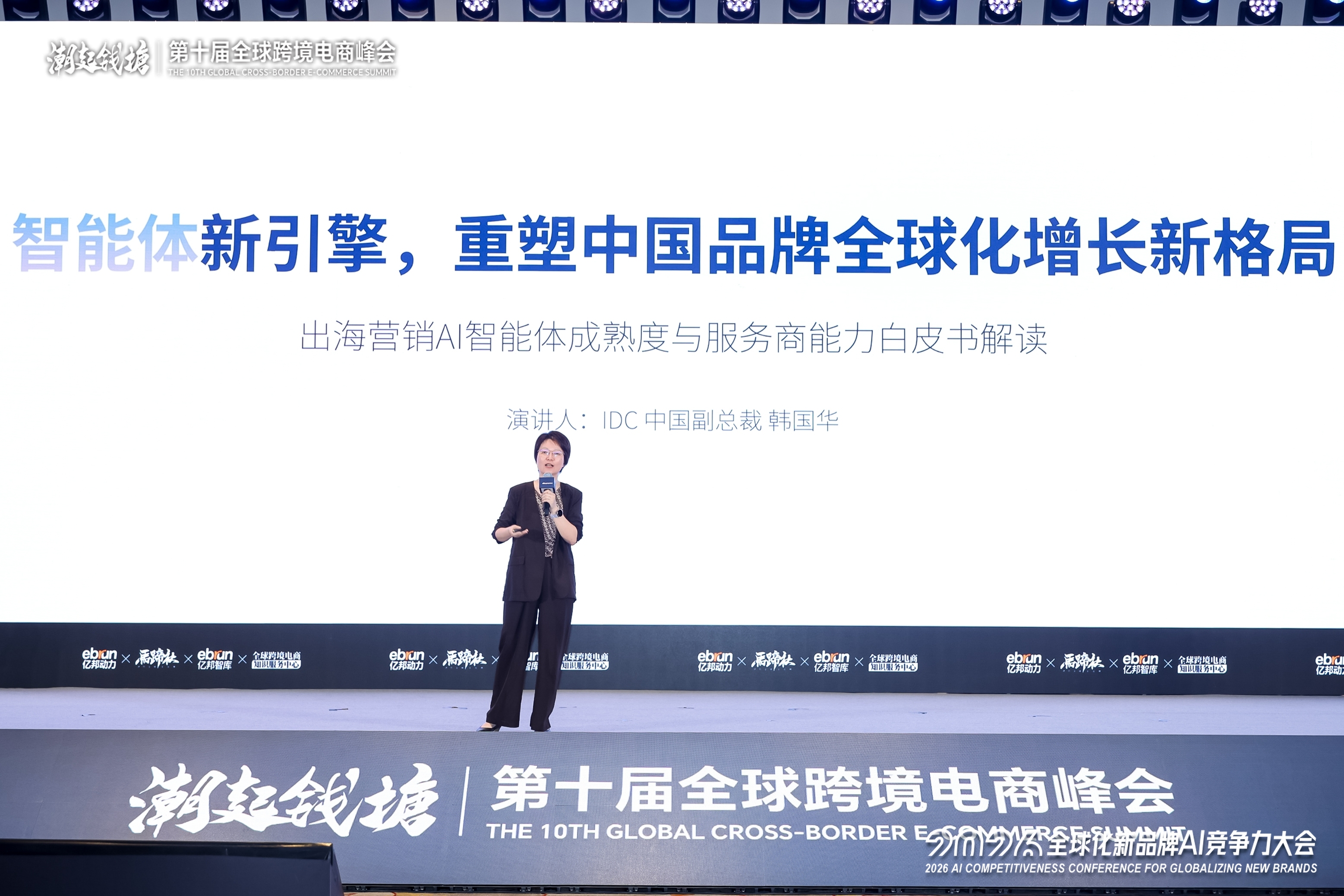
IDC中国副总裁韩国华:出海AI营销要从单点提效走向全链路增长闭环

亿邦动力 2026-07-24 09:12
亿邦动力 2026/07/24 09:12

邦小白快读

EN
全文速览

本文是IDC中国副总裁韩国华在2026全球化新品牌AI竞争力大会上的演讲整理,核心分享了中国出海企业AI营销的发展现状与落地实操干货,核心信息如下

1. 行业现状:IDC调研200家出海企业发现,近八成受访企业已经在营销场景广泛使用AI,但整体成熟度处于早期,多数企业处于工具辅助人工决策的L1阶段和基础自动化的L2阶段,仅少数场景接近L3,L5仍为远期愿景;内容创意本地化、媒介投放优化是目前AI应用最多、成熟度最高的两个场景。

2. 实操落地建议:企业不用盲目追求最先进的高阶AI技术,应从适配自身业务的成熟场景切入;提前做好风险分级,涉及敏感信息保留人工审核、过程留痕;优先从成熟场景切入逐步推进,同时建立配套组织机制,明确负责人,协调内外部资源推进AI营销落地。

本文给出海品牌开展AI营销、布局全球化增长提供了行业调研数据和实操指导,核心干货如下

1. 行业现状与消费市场变化:当前中国出海品牌发展势头强劲,部分头部厂商全球市占率达30%以上,但多数区域市场仍处于起步阶段,同时行业普遍面临监管趋严、获客与本地化成本居高不下的痛点,AI已经成为品牌降本增效的核心工具,近八成出海品牌已经在营销场景应用AI。

2. 未来品牌营销方向:AI营销要从单点提效转向全链路增长闭环,通过AI串联创意、投放、风控、用户运营,覆盖用户触达、留存、复购全流程,实现可衡量的ROI提升。

3. 落地建议:不要盲目追求高阶自动化,选择适配自身发展阶段的方案;提前做好不同海外市场的合规风险分级;选择服务商优先关注全链路服务能力,而非单一工具能力,同时配套内部组织机制保障落地。

本文为出海卖家明确了AI营销领域的发展机会、落地路径与风险提示,核心干货如下

1. 市场机会:当前AI已经成为出海营销降本增效的核心解决方案,近八成出海卖家已经应用AI,超过八成营销决策者认为,用好AI可以带来10%到30%的营收提效,能够解决当前卖家普遍面临的获客成本高、本地化成本高、投放效率低的痛点。

2. 发展方向提示:卖家不要只停留在单点AI降本增效,下一步要布局全链路增长闭环,打通创意、投放、风控、用户运营全环节,实现一体化增长。

3. 风险与落地提示:不要盲目追求高阶自动化技术,优先从内容创意、媒介投放这类成熟场景切入;提前做好不同海外市场的合规风险分级,敏感内容保留人工审核,规避监管风险;不要盲目独自投入搭建AI系统,优先联合专业服务商推进,控制成本。

本文为出海相关工厂把握产业机会、推进数字化转型提供了启示,核心干货如下

1. 出海行业整体机会:当前中国出海行业发展势头强劲,业务遍布全球,部分头部厂商全球市场占有率已经达到30%以上,除东南亚、西欧部分区域外,多数区域市场仍处于起步发展阶段,整体增长空间很大。

2. 产业升级带来的新机会:当前出海企业普遍面临获客、本地化成本居高不下的痛点,都在加快AI营销升级,对AI营销相关的配套产品、服务有大量需求,布局相关领域的工厂可以抓住这波产业升级的商业机会。

3. 工厂数字化转型启示:工厂推进数字化和电商转型时,不用盲目追求最先进的技术,要从适配自身业务的成熟场景切入,优先解决核心痛点;落地过程中要同步做好风险管控,建立配套的组织机制,逐步推进,最终实现全链路的数字化增长升级。

本文通过调研明确了出海AI营销领域的客户痛点、行业趋势,给服务商指明了发展方向,核心干货如下

1. 当前客户核心痛点:近八成出海企业已经在营销场景应用AI,但整体应用处于早期,企业对当前分散的单点AI工具不满意,不愿意独自投入大量精力搭建和管理各类智能体,迫切需求能理解品牌营销全链路的服务商,帮助把分散的AI应用串联起来,转化为实际业务增长。

2. 行业发展趋势:未来AI营销的核心发展方向是从单点提效走向全链路一体化增长闭环,企业需要的不再是单一功能的工具,而是能帮助实现全链路ROI提升的整合服务。

3. 服务商发展方向建议:当前不同类型服务商各有优势,执行类、媒体代理类、MarTech工具类服务商可以发挥各自优势,深化协同,共同为品牌企业提供全链路AI营销服务,满足企业对一体化增长闭环的需求。

本文调研了出海企业对AI营销的需求,给布局出海营销服务的平台商指明了优化方向,核心干货如下

1. 当前客户对平台的核心需求:当前出海企业已经普遍使用AI营销工具,很多平台也已经内置了AI工具,但客户不满足于分散的单点AI应用,迫切需要平台能提供支持全营销链路的整合AI服务,帮助打通从创意、投放到用户运营的全环节,实现覆盖触达、留存、复购的全链路增长闭环。

2. 平台生态运营优化方向:平台可以围绕客户全链路增长的需求,整合生态内不同类型服务商的能力,帮助客户连接分散的AI应用,解决客户独自搭建系统成本高、效果差的痛点,也能吸引更多客户入驻平台。

3. 风向规避建议:平台需要引导客户建立合规风险分级机制,针对不同海外市场的监管要求,配套人工审核、过程留痕等管理规则,帮助客户规避合规风险,同时完善生态内的协作机制,明确各方权责,推动AI营销健康落地。

本文分享了IDC对出海AI营销的最新调研成果,提出了产业发展的新动向与分析框架,给产业研究者提供了一手研究资料,核心内容如下

1. 产业新动向:当前AI已经率先在出海营销场景落地,近八成出海企业已经广泛应用AI,整体成熟度处于早期阶段,多数企业处于L1工具辅助决策和L2基础自动化阶段,仅少数场景接近L3;AI应用最多成熟度最高的场景是内容创意本地化与媒介投放优化,不同行业成熟度存在差异,跨境电商投放、App用户运营的成熟度相对更高。

2. 行业新问题:当前企业普遍面临单点AI应用无法带动整体增长的问题,多数企业不具备独自搭建全链路AI系统的能力,同时出海企业还要应对不同市场的合规风险,这些都是产业发展需要解决的新问题。

3. 新的研究框架:IDC提出了从L0到L5的AI营销成熟度评估模型,同时提出AI营销是系统工程,需要匹配业务场景、同步建设风险管理与组织机制,为后续产业研究提供了新的分析框架。

返回默认

声明:快读内容全程由AI生成,请注意甄别信息。如您发现问题,请发送邮件至 run@ebrun.com 。

我是 品牌商 卖家 工厂 服务商 平台商 研究者 帮我再读一遍。

Quick Summary

This article is a transcription of a speech by Han Guohua, Vice President of IDC China, delivered at the 2026 Global New Brands AI Competitiveness Conference. It shares the current development status and practical implementation insights of AI marketing for Chinese cross-border enterprises. Key takeaways are as follows:

1. Industry status quo: A survey of 200 cross-border Chinese enterprises conducted by IDC found that nearly 80% of respondents already widely use AI in marketing scenarios, but the overall maturity remains at an early stage. Most companies are at Level 1 (AI-assisted human decision-making) and Level 2 (basic automation), with only a small number of scenarios approaching Level 3, and Level 5 remains a long-term vision. Localized content creation and media placement optimization are currently the two most widely adopted and most mature AI application scenarios.

2. Practical implementation guidance: Enterprises should not blindly pursue cutting-edge high-level AI technologies, and should start with mature scenarios that fit their own business. They should conduct risk classification in advance, retain manual review for sensitive information, and keep full process records. Companies are advised to roll out AI marketing incrementally starting from mature scenarios, while establishing supporting organizational mechanisms, assigning clear ownership, and coordinating internal and external resources to drive implementation.

This article provides industry survey data and practical guidance for cross-border brands looking to adopt AI marketing and drive global growth. Key insights are as follows:

1. Industry status and changing consumer markets: Chinese cross-border brands are currently growing strongly, with some leading players holding over 30% global market share, but most regional markets are still at an early stage of development. The industry broadly faces headwinds of stricter regulation and persistently high customer acquisition and localization costs. AI has become a core tool for brands to cut costs and improve efficiency, with nearly 80% of cross-border brands already adopting AI in marketing scenarios.

2. Future direction of brand marketing: AI marketing needs to evolve from isolated efficiency improvements to a full-funnel growth closed loop. By connecting creative development, placement, risk control, and user operations across the entire user journey of reach, retention, and repurchase, brands can achieve measurable improvements in ROI.

3. Implementation guidance: Do not blindly pursue high-level automation; choose solutions that match your current development stage. Conduct compliance risk classification in advance for different overseas markets. When selecting service providers, prioritize end-to-end service capabilities over single-tool functionality, and establish internal organizational mechanisms to support implementation.

This article clarifies growth opportunities, implementation paths, and risk warnings for cross-border sellers in AI marketing. Key insights are as follows:

1. Market opportunities: AI has already become a core solution for cutting costs and improving efficiency in cross-border marketing, with nearly 80% of cross-border sellers already adopting AI. More than 80% of marketing decision-makers believe that effective AI adoption can drive 10-30% revenue growth, helping address the widespread pain points of high customer acquisition costs, high localization costs, and low placement efficiency faced by sellers.

2. Development direction: Sellers should not stop at isolated AI-powered cost reduction and efficiency improvement. The next step is to build a full-funnel growth closed loop that connects creative development, placement, risk control, and user operations to achieve integrated growth.

3. Risks and implementation guidance: Do not blindly pursue high-level automation; start with mature scenarios such as localized content creation and media placement optimization. Conduct compliance risk classification in advance for different overseas markets, and retain manual review for sensitive content to avoid regulatory risks. Do not invest heavily in building standalone AI systems in-house; partner with professional service providers to control costs.

This article provides insights for export-oriented factories to capture industry opportunities and advance digital transformation. Key takeaways are as follows:

1. Overall cross-border industry opportunities: China's cross-border industry is currently growing strongly, with operations spanning the globe. Some leading players already hold over 30% global market share, but most regional markets (outside parts of Southeast Asia and Western Europe) remain at an early development stage, leaving substantial room for overall growth.

2. New opportunities from industrial upgrading: Cross-border enterprises broadly face the pain point of persistently high customer acquisition and localization costs, and are accelerating AI marketing upgrades, creating strong demand for supporting AI marketing-related products and services. Factories active in related fields can capture this business opportunity brought by industrial upgrading.

3. Insights for factories' digital transformation: When advancing digital and e-commerce transformation, factories should not blindly pursue cutting-edge technology, but start with mature scenarios that fit their business to address core pain points first. They should implement risk control alongside rollout, establish supporting organizational mechanisms, and advance incrementally to eventually achieve full-funnel digital growth and upgrading.

Based on industry survey data, this article clarifies customer pain points and industry trends in the cross-border AI marketing sector, and outlines a clear development direction for service providers. Key insights are as follows:

1. Core current customer pain points: Nearly 80% of cross-border enterprises already use AI in marketing scenarios, but overall adoption remains at an early stage. Enterprises are dissatisfied with currently fragmented, single-point AI tools, and are unwilling to invest significant in-house resources to build and manage multiple independent AI agents. They urgently need service providers that understand the full brand marketing funnel to help connect fragmented AI applications and drive tangible business growth.

2. Industry development trend: The core future direction of AI marketing is shifting from isolated efficiency improvements to an integrated full-funnel growth closed loop. Enterprises no longer need single-function tools, but integrated services that help improve full-funnel ROI.

3. Development guidance for service providers: Different types of current service providers each have their own strengths. Execution-focused, media agency, and MarTech tool providers should leverage their respective advantages, deepen collaboration, and jointly deliver full-funnel AI marketing services to brand enterprises to meet their demand for an integrated growth closed loop.

This article surveys cross-border enterprises' demand for AI marketing, and outlines optimization directions for platform operators offering cross-border marketing services. Key insights are as follows:

1. Core current customer demand for platforms: Cross-border enterprises now widely use AI marketing tools, and many platforms already have built-in AI tools, but customers are not satisfied with fragmented single-point AI applications. They urgently need platforms to provide integrated AI services that support the entire marketing funnel, helping connect all stages from creative development and placement to user operations, and build a full-funnel growth closed loop covering reach, retention, and repurchase.

2. Optimization direction for platform ecosystem operations: Platforms can align with customers' full-funnel growth demand, integrate capabilities of different types of service providers in their ecosystem, help customers connect fragmented AI applications, and address the pain points of high cost and poor performance associated with building in-house systems. This will also help attract more merchants to join the platform.

3. Risk mitigation guidance: Platforms should guide customers to establish a compliance risk classification framework, put in place supporting rules such as manual review and process audit trails aligned with regulatory requirements of different overseas markets to help customers avoid compliance risks. They should also improve collaboration mechanisms within the ecosystem, clarify responsibilities of all parties, and drive the healthy implementation of AI marketing.

This article shares IDC's latest research findings on AI marketing for cross-border enterprises, proposes new industry trends and an analytical framework, and provides first-hand research materials for industry researchers. Key content is as follows:

1. New industry trends: AI has already achieved first-mover adoption in cross-border marketing scenarios, with nearly 80% of cross-border enterprises already widely applying AI. Overall maturity remains at an early stage: most companies are at L1 (AI-assisted decision-making) and L2 (basic automation), with only a small number of scenarios approaching L3. The most widely adopted and most mature AI scenarios are localized content creation and media placement optimization. Maturity varies across sectors, with cross-border e-commerce placement and app user operation showing relatively higher maturity.

2. New industry challenges: Enterprises currently broadly face the problem that isolated AI applications cannot drive overall growth, most lack the capability to build a full-funnel AI system in-house, and cross-border enterprises also need to address compliance risks in different markets. These are new challenges the industry needs to resolve.

3. New analytical framework: IDC proposes an AI marketing maturity assessment model ranging from L0 to L5, and puts forward that AI marketing is a systems engineering project that requires alignment with business scenarios and parallel development of risk management and organizational mechanisms, providing a new analytical framework for future industry research.

Disclaimer: The "Quick Summary" content is entirely generated by AI. Please exercise discretion when interpreting the information. For issues or corrections, please email run@ebrun.com .

I am a Brand Seller Factory Service Provider Marketplace Seller Researcher Read it again.

【亿邦原创】7月23日,在亿邦动力“2026全球化新品牌AI竞争力大会”上,IDC中国副总裁韩国华发表了题为“智能体新引擎,重塑中国品牌全球化增长的新格局”的演讲。

韩国华表示,IDC对目前正在出海的200家企业进行了调研。结果显示,近八成受访企业已经在营销场景广泛使用AI和智能体,但从整体成熟度来看,多数企业仍处于工具辅助人工决策的L1阶段,以及部分实现基础自动化的L2阶段,仅少数应用场景接近L3,只有经历长期的创新与优化过程才有望实现L5。

在营销全链路中,内容创意与本地化、媒介投放与优化是AI应用频率最高、成熟度相对领先的两个场景。下一阶段,出海企业关注的重点将不只是局部降本增效,而是利用AI串联创意、投放、风控和用户运营,形成覆盖触达、留存与复购的增长闭环,利用AI打通整个增长闭环,真正实现ROI。

韩国华认为,AI营销是一项系统工程。企业不必急于追求最先进的技术或更高的自动化等级,而应从适配自身业务的成熟场景切入,同时将风险管理、组织机制和服务商协同纳入整体实施路径。


本文根据嘉宾现场演讲整理,在不影响原意的基础上有所删改。

以下为演讲实录:

01 近八成企业已广泛使用AI,但整体成熟度仍处于早期

各位在座的领导,杭州的新老朋友们,大家上午好!

今天上午的分享让我很受触动。刚才邱总提到,AI会重塑消费者体验的方方面面;江总也谈到“必有一战”,这一战就是品牌心智之战。在这里,也感谢飞书深诺沈总对我们这个项目的支持。

IDC研究了目前正在出海的200家企业,重点关注AI智能体对业务的赋能。出海企业在营销和品牌建设中究竟进展如何?下一步的发力点在哪里?今天,我向大家汇报一下这项研究的关键发现。

调研显示,中国企业的出海业务遍布全球,发展势头很猛。在一些特定赛道,头部厂商的全球市场占有率能够达到30%以上。但从全球不同区域来看,除东南亚和西欧的部分地区外,大多数企业的业务仍处于起步和发展阶段。

近年来,随着监管趋严、获客成本居高不下,企业迫切需要探索一条新路,进一步加强本地化,实现从“出海”到“入海”。

在这个过程中,企业面临的首要挑战是本地化成本居高不下,营销策略制定难度较大,媒介投放也在逐渐遭遇效率瓶颈。因此,我们需要借助新的方式,特别是AI和智能体,实现降本增效。

从出海业务的不同场景来看,营销已经成为AI率先落地的高地。近八成受访企业已经在营销场景广泛使用AI和智能体。

那么,应该如何衡量智能体在营销环节的成熟度?企业究竟用得好不好?

我们梳理了影响消费者心智的关键环节,包括用户和市场洞察、战略制定、内容创意与本地化、媒介投放与优化、整合营销和用户运营。在每一个环节,我们都设置了不同的衡量维度,最终形成了一套类似智能驾驶的、从L0到 L5的智能体成熟度评估模型。

企业可以结合自身实践和行业标杆数据“照照镜子”:自己现在处于什么位置,同行又处于什么位置?

总体来看,很多企业还停留在由工具辅助人工决策的L1阶段,以及部分实现基础自动化的L2阶段;少数应用领域已经接近L3。至于L5,我们认为目前更多是一种面向未来的愿景,需要经历长期的创新与优化过程才有望实现。

从六个主要营销环节的评估结果来看,媒介投放与优化的成熟度最高,整体基本处于L2,部分单点应用接近L3;内容创意与本地化大多处于L2;用户和市场洞察处于L1至 L2之间;其他一些营销环节则仍处于相对初步的L1阶段。

不同行业的成熟度也存在差异。我们研究了十个出海行业,其中,品牌出海正处于从L1向 L2过渡的阶段;跨境电商在投放领域局部能够达到L3,但整体仍以L2为主;App行业整体处于L2,其中用户运营场景已经达到L3;游戏行业则基本处于从L1向 L2过渡的阶段。

这些结果反映了当前的整体状态:大家普遍认为AI非常重要,也看到了它可能创造的价值,但实际应用仍处于早期阶段,需要产业各方形成合力,加快利用AI和智能体赋能营销。

02 创意和投放使用场景最深,企业希望打通全链路增长闭环

在营销的各个环节中,企业使用AI最多的是哪些场景?

排名前两位、使用比例均超过八成的,分别是内容创意与本地化、媒介投放与优化。这是目前企业使用AI智能体最频繁、程度最深的两个场景。此外,AI也被用于全生命周期战略洞察等环节。

从使用频率来看,内容创意和媒介投放已经进入“经常使用”的阶段,而部分其他营销环节仍以“偶尔使用”为主。

企业使用的工具五花八门,包括通用大模型、第三方营销工具,以及内置在媒介投放平台中的AI工具。不过,我们在调研中听到一个非常强烈的呼声:企业不希望再独自投入大量精力搭建和管理各种智能体,因为这件事很难做好。

大家更希望找到真正理解营销、理解品牌建设全链路的服务商,共同推进AI营销。

超过八成的受访营销决策者认为,如果能够用好AI,可以为公司营收带来10%至30%的提效。但企业真正关心的不是简单地部署一个工具,而是AI能否产生可衡量的商业价值。

在访谈调研中,大家对下一步的发展方向形成了比较明确的共识:重点布局创意、投放和风控等场景,利用AI打通整个增长闭环,真正实现ROI。

企业不希望继续“头痛医头、脚痛医脚”,而是希望将不同营销环节串联起来,形成覆盖触达、留存和复购的全链路、一体化增长闭环。

在机遇与挑战并存的全球市场中,企业希望借助科技的力量和美学的方式,让中国品牌在国际舞台上扮演越来越重要的角色。

围绕这一需求,IDC也分析了从供给方到需求方的不同生态和落地方式。目前,出海营销服务生态非常丰富。不同类型的服务商在数据资产、数据转化能力和AI自动化程度上各有侧重。

有些服务商侧重执行,有些侧重媒体资源代理,还有一些MarTech公司深耕垂直工具,甚至在局部应用上实现了L3。不同生态位置上的服务商,可以从不同侧面帮助品牌提升营销智能化水平。

对于品牌企业来说,选择服务商时不能只关注单一工具能力,还要关注其能否理解品牌建设的完整链路,能否协助企业把分散的AI应用连接起来,并最终转化为业务增长。

03 AI营销是一项系统工程,风险与组织能力必须同步建设

品牌企业究竟应该怎样推动AI营销落地?通过大量案例和调研,IDC总结了四点建议。

第一,AI是一项系统工程。企业不必急于追求最先进的技术,也不必一开始就追求L3、L4的自动化水平,关键是让技术与自身业务场景相匹配。企业需要先判断哪些问题最值得用AI解决、哪些场景的应用条件已经成熟,再确定相应的自动化水平。成熟度等级并非越高越好,适合业务发展阶段才是最重要的。

第二,做好风险分级。AI能够自动生成大量内容,但涉及敏感信息时,人工审核、过程留痕等关键步骤仍然不可或缺。尤其在品牌全球化过程中,不同市场存在不同的监管和合规要求,风险问题必须前置考虑。

第三,在实施路径上逐步推进。内容创意、媒介投放等相对成熟的场景,可以作为快速切入点;一些创新场景,则需要供需双方在实践中持续探索。面对出海合规的各种红线,企业不能只看效率,还要同步评估风险。

第四,建立相应的组织配套。企业需要设置明确的负责人,建立内部团队与外部服务商各司其职的协作机制,把AI营销作为系统工程持续推进。

只有将业务场景、技术能力、风险管理和组织机制结合起来,企业才有可能系统性地推进AI营销和品牌建设,更好地参与国际市场竞争。

由于时间关系,今天只能分享报告中的一部分内容。完整报告共有40页,包含不同行业的详细数据。大家可以结合报告,对比自身现阶段的营销智能体成熟度,并参考行业标杆寻找下一步的发力方向。

我的分享就到这里,谢谢大家。

文章来源:亿邦动力

广告
微信
朋友圈

FAQ回顾

出海企业目前AI营销应用成熟度处于什么水平?

IDC对200家出海企业调研显示,近八成受访企业已在营销场景广泛使用AI,多数处于工具辅助人工决策的L1阶段、部分实现基础自动化的L2阶段,仅少数应用场景接近L3,内容创意与本地化、媒介投放与优化是当前应用成熟度领先的两个场景。

出海企业布局AI营销的核心方向是什么?

出海企业布局AI营销不再仅追求局部降本增效,核心是利用AI串联创意、投放、风控和用户运营,形成覆盖触达、留存与复购的全链路增长闭环,实现可衡量的ROI,不必急于追求过高的自动化等级,适配自身业务发展阶段即可。

出海企业落地AI营销有哪些注意要点?

出海企业落地AI营销可参考IDC给出的四点建议:一是适配自身业务场景选择合适的技术及成熟度等级;二是做好风险分级,前置考量不同市场合规要求;三是从内容创意、媒介投放等成熟场景切入逐步推进;四是建立配套组织机制,协同内外部资源落地。

AI在出海营销中落地最多的场景有哪些?

当前出海营销领域中,AI应用频率最高、成熟度相对领先的两个场景是内容创意与本地化、媒介投放与优化,使用比例均超过八成,已进入经常使用阶段,其余营销环节仍以偶尔使用为主。

这么好看,分享一下?

朋友圈 分享

APP内打开

+1
+1
微信好友 朋友圈 新浪微博 QQ空间
关闭
收藏成功
发送
/140 0